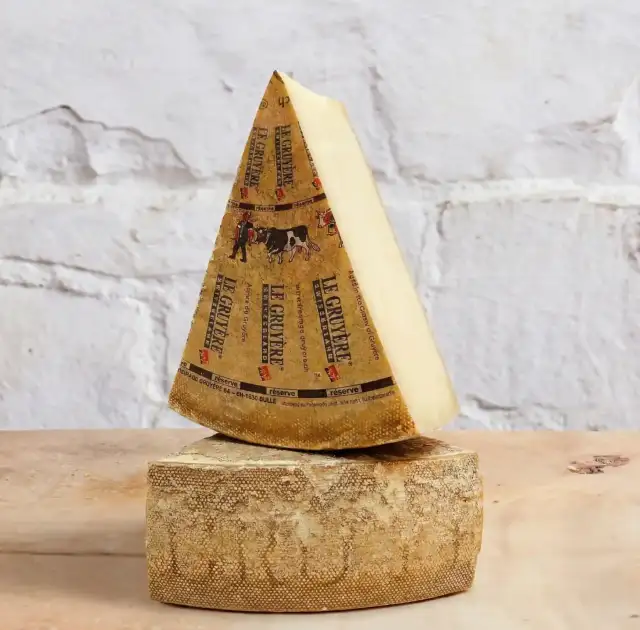
Gruyere 6mth 165g
About This Cheese
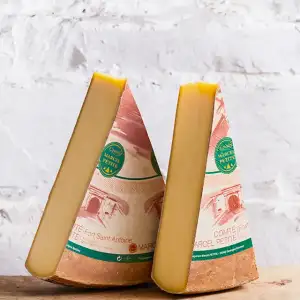
Gruyère has a nutty flavour with hints of ripe orchard fruits such as apples and pears. The initial fruitiness gives way to more robust, beefy aromas. Our Gruyère tends to have a more pungent and savoury flavour than it’s close French relation Comté.
TypeHard
Rennettraditional
RegionCanton of Fribourg, Switzerland
ProducerN/A
Milkraw cow
Rindwashed
€7.25

Story
Pringy dairy is located just beneath the historic village of Gruyère and is the official show-dairy of the Gruyère association of Switzerland. To produce Gruyère cheese with respect to tradition and in following the strict production guidelines set out by Gruyere association as a means to protect this cheese. From the carefully selected dairy farms to the production of Gruyere cheese, every step along the way is documented and controlled for to maintain the cheese integrity. The milk used to make Pringy Gruyère comes from a chosen group of surrounding farms and arrives at the dairy twice daily and must be turned into cheese within 23 hours of the milking. Even with these rules and others, the various cheeses sometimes show significant differences in flavour from season to season or batch to batch.
Producer
The cheese from the Pringy dairy has been produced by the brothers Jacques and Nicolas Eccofey since 2004. Twice a day 36 farmers deliver their milk to the fromagerie. This comes from cows that graze the lush grass and fragrant flora of alpine meadows situated between 800 and 1600 metres above sea level. Under the watchful eyes of the master cheese-makers and their team, they produce up to 48 wheels of Gruyère a day, observing the stringent AOP (appellation d’origine protégée) specifications. (mundig)
Goes Well With

Sheridans Caramelised Onion Relish 220g
€5.80Add to Bag
Sheridans Rye & Linseed Crackers 140g
€3.70Add to Bag
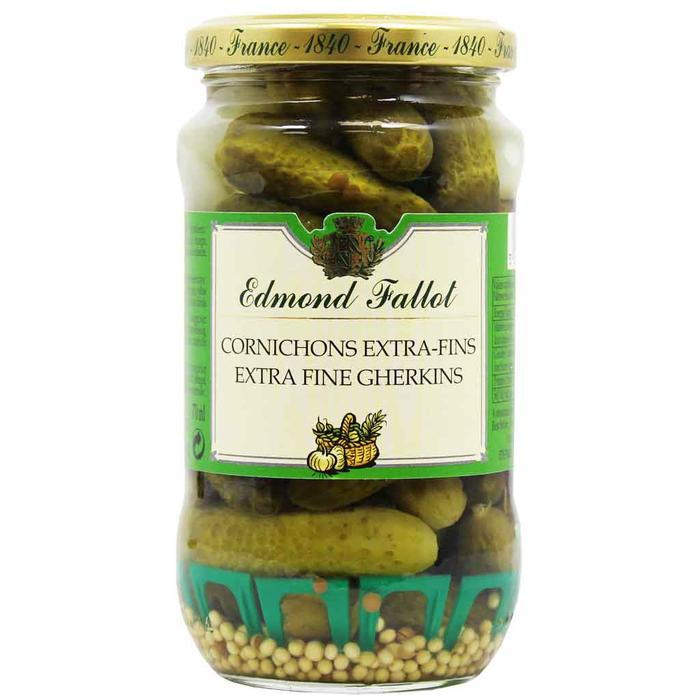
Fallot Cornichons 370g
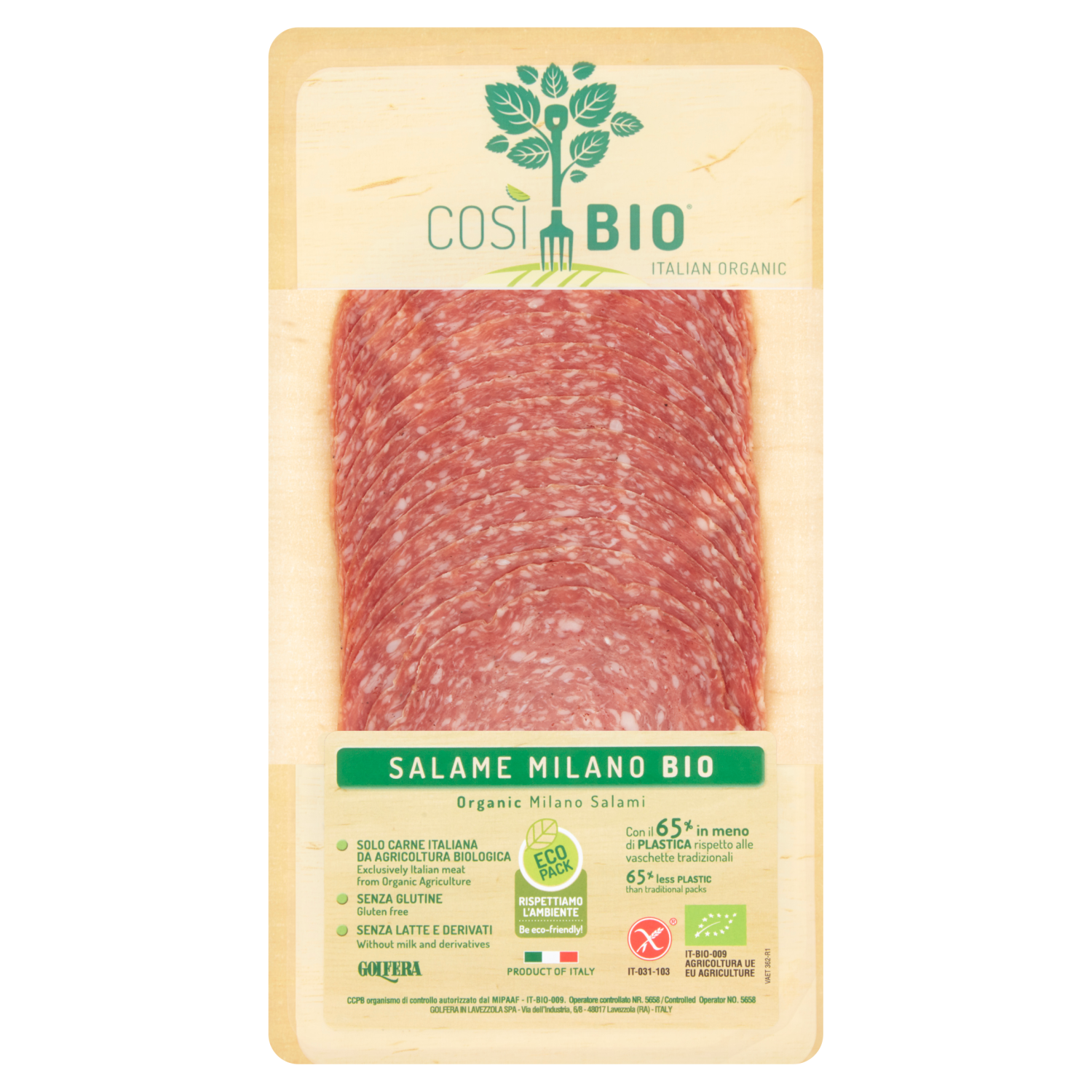
€7.50Add to BagGolfera Organic Salami Milano 80g
€3.95Add to Bag
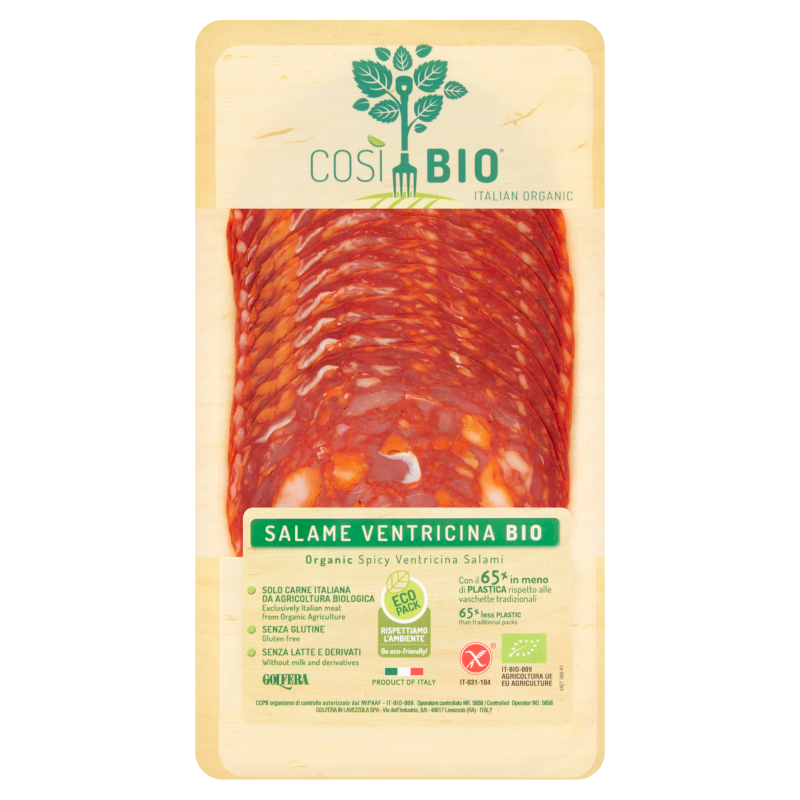
Golfera Organic Ventricina Salami 80g
€4.20Add to BagMacelleria Falorni Classico Toscano Salami 130g
€8.80Add to Bag



You may also like…
Recipes

FAQs
Cheese should be unpacked and stored in a cool place, ideally around 5 degrees. Take out about an hour before serving, and allow to come to room temperature. Leaving cheese come up to room temperature (“to chambre”) allows it to develop a fuller, more aromatic flavour. Beware temperatures that are too warm (hot kitchen) and try and let the cheese come up to temperature in a relatively cool place like a cool pantry. Harder cheeses can need a little more time than softer ones.
Cheeses like cheddars that have more open texture pastes where the curd is not heavily compacted during the cheesemaking process can have occasional blue veining. Though this blueing is caused by unintentional rouge pencillium genus mould that has found its way into the cheese, it is often sought after for its contributing flavour.
Frequently, cheeses that start to grow mould while aging, in storage, or during transit can be salvaged and are safe to consume. In the case of blue/white mould that has begun to form, it can be scraped off with regular dinner knife or back of chef knife, and bloomy rind cheeses often begin to re-rind themselves on the cut surface which can just be cut off or eaten.
Spoiled cheese has some key indicators – if you get an ammonia/sour smell or taste then it goes in the bin.
Fresh, high moisture, young cheeses (think mozzarella/ricotta/mascarpone/cream cheese) that have mould growing should be discarded immediately.
Moulds that show up with black or reddish hue should be discarded.
Our primary aim is to provide delicious, quality, safe cheeses to our Sheridans customers however cheese is a living thing with an agenda of its own. If you believe your cheese (or other food item) has spoiled, please contact us immediate at online@sheridanscheesemongers.com for a replacement or refund.
Nutritional Information
Ingredients: Cow’s (MILK), salt, starter cultures, rennet
Allergens listed in bold.
Nutritional Info Per 100g
Energy kJ/kCal 1660/400
Fat 32g
of which saturates 13g
Carbohydrates 0g
of which sugars 0g
Protein 27g
Salt 1.6g