Shropshire Blue 200g
About This Cheese
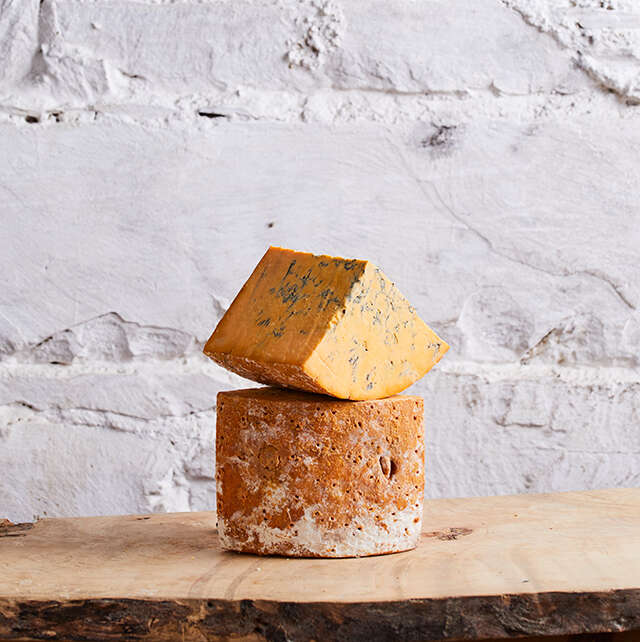
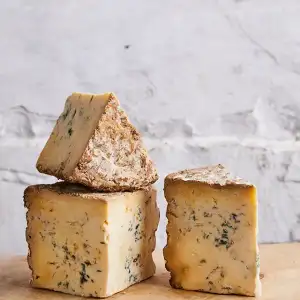
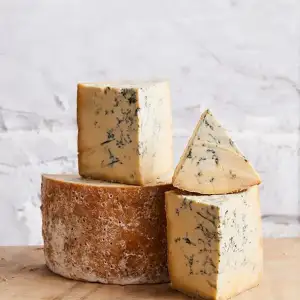
Colston Basset Shropshire Blue cheese has an exquisite, nutty flavour, shot through with spicy notes. Its delightful taste and creamy texture are matched by its beautiful appearance, as blue veins radiate through its deep-orange body.
TypeBlue, Hard
Rennetvegetarian
RegionNottinghamshire, England
Producercolston bassett dairy
Milkcow
RindN/A
€9.20

Story
This relatively modern cheese was invented in Inverness in the 1970s, presumably as a means of producing a Stilton-style cheese that was not subject to the same stringent geographical restrictions. Colston Bassett Dairy make the cheese in the same-sized cheese moulds as Stilton and before the cheeses are opened they look very similar indeed. However, the orange annatto dye used in Shropshire Blue ensures that the visual similarity between the two stops as soon as the wheel is opened. Stilton and Shropshire are quite similar in taste. In equivalent conditions, Shropshire Blue is the milder of the two, with a slightly fruitier flavour and less bitterness and richness than their Stilton.
Producer
The Stilton story is a model of artisan pride and business astuteness. The Stilton Makers’ Association was set up in 1910 to protect Stilton makers from competitors trying to copy the cheese. As a result, today only eight dairies are legally permitted to make Stilton. The Colston Bassett Dairy is universally recognised as the best of these. This 100-year-old dairy has been making Stilton with the same techniques for three generations, the only difference being the introduction of pasteurisation in 1990. (BOOK)
Goes Well With


FAQs
Cheese should be unpacked and stored in a cool place, ideally around 5 degrees. Take out about an hour before serving, and allow to come to room temperature. Leaving cheese come up to room temperature (“to chambre”) allows it to develop a fuller, more aromatic flavour. Beware temperatures that are too warm (hot kitchen) and try and let the cheese come up to temperature in a relatively cool place like a cool pantry. Harder cheeses can need a little more time than softer ones.
Cheeses like cheddars that have more open texture pastes where the curd is not heavily compacted during the cheesemaking process can have occasional blue veining. Though this blueing is caused by unintentional rouge pencillium genus mould that has found its way into the cheese, it is often sought after for its contributing flavour.
Frequently, cheeses that start to grow mould while aging, in storage, or during transit can be salvaged and are safe to consume. In the case of blue/white mould that has begun to form, it can be scraped off with regular dinner knife or back of chef knife, and bloomy rind cheeses often begin to re-rind themselves on the cut surface which can just be cut off or eaten.
Spoiled cheese has some key indicators – if you get an ammonia/sour smell or taste then it goes in the bin.
Fresh, high moisture, young cheeses (think mozzarella/ricotta/mascarpone/cream cheese) that have mould growing should be discarded immediately.
Moulds that show up with black or reddish hue should be discarded.
Our primary aim is to provide delicious, quality, safe cheeses to our Sheridans customers however cheese is a living thing with an agenda of its own. If you believe your cheese (or other food item) has spoiled, please contact us immediate at online@sheridanscheesemongers.com for a replacement or refund.
Nutritional Information
Ingredients: Blue Cheese (Milk, Colour: Annatto)
Allergens listed in bold
Nutritional values per 100g
Energy: 1700kJ/410kcal
Fat: 35.0g
– of which saturates: 23.0g
Carbohydrates: 0.1g
– of which sugars: 0.1g
Protein: 23.7g
Salt: 2.0g