Recently Added (1)

View BagCheckout

Subtotal: 4.20

View BagCheckout

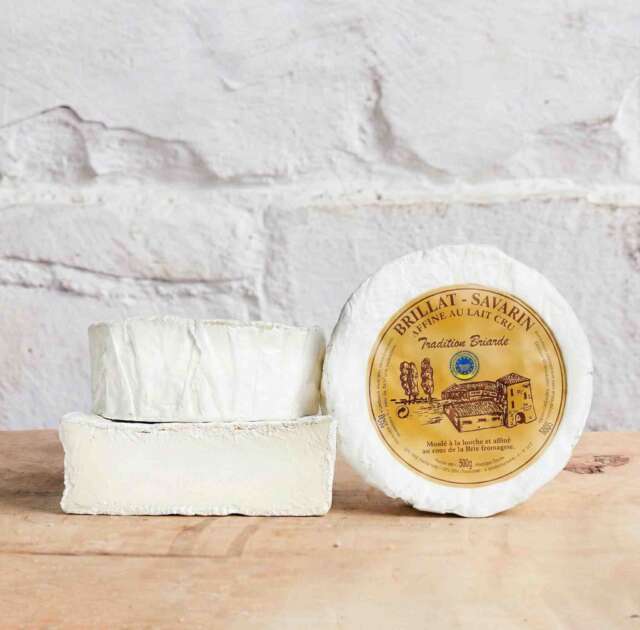
Brillat Savarin 500g

About This Cheese

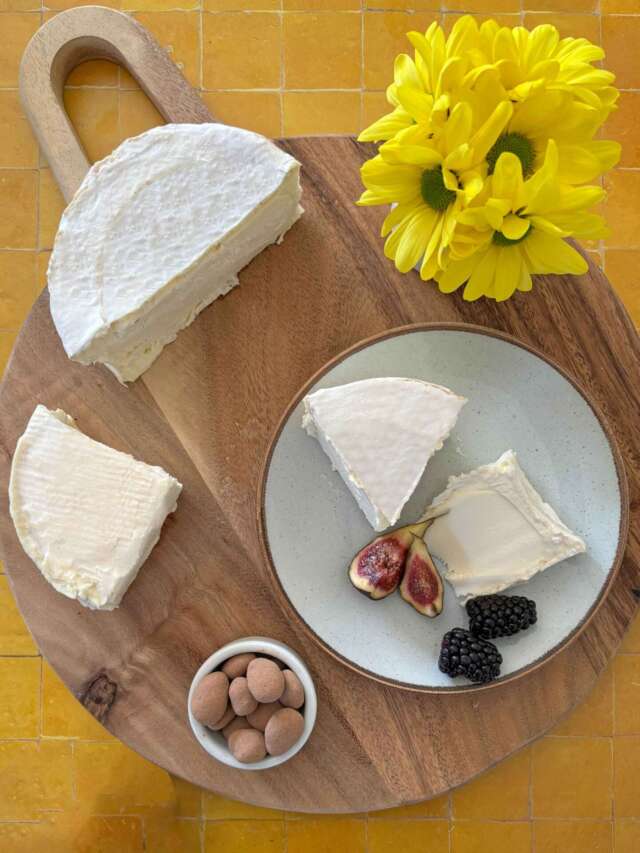
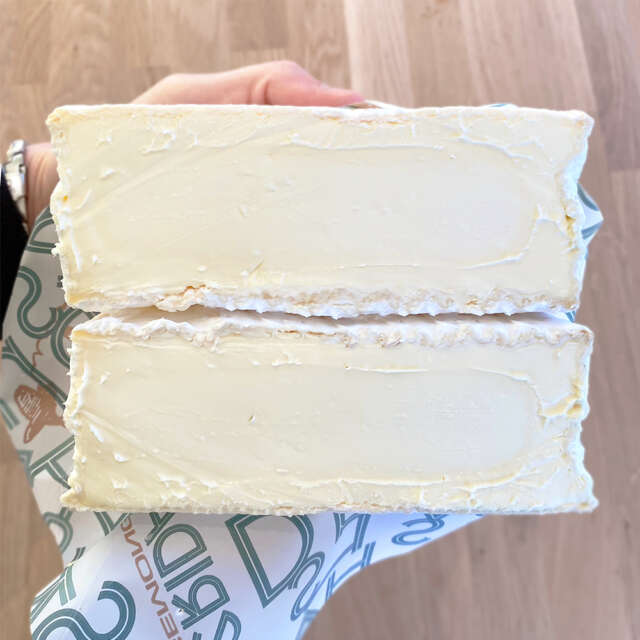
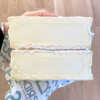
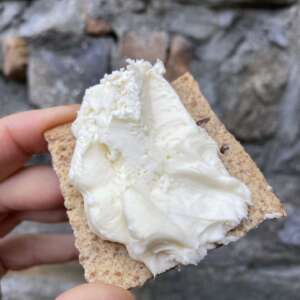
A rich, sumptuous cheese with bright minerality is surrounded by a white bloomy rind. Brillat Savarin is 75% butterfat, achieved by adding cream to the cow’s milk in the cheesemaking process, resulting in a white paste that tastes like a heavenly mixture of butter and stiffly whipped cream. 

TypeSoft

Rennettraditional

RegionFrance

ProducerFromagerie Rouzaire

Milkcow

Rindmould rind

Original price was: €21.50.Current price is: €17.20.

Out of stock

Story

Brillat-Savarin is probably the most famous and the original extra cream bloomy-rind cheese. It was created by a French cheesemaker in the nineteenth century and was originally called Délice des Gourmets. It was renamed Brillat-Savarin by Henri Androuët in the 1930s as a homage to eighteenth-century French gastronome Jean Anthelme Brillat-Savarin. Although these cheeses have a bloomy rind, the high fat content slows down the action of the rind. Together with a typically thicker shape to the cheese, the rind of extra creams rarely breaks down the structure of the cheese. If a long ripening is allowed, the cheeses develop an unpleasant sharp flavour, as opposed to the more subtle, sweet, butter flavour of younger extra cream cheeses.

Goes Well With

Recipes

FAQs

A

Cheese should be unpacked and stored in a cool place, ideally around 5 degrees. Take out about an hour before serving, and allow to come to room temperature. Leaving cheese come up to room temperature (“to chambre”) allows it to develop a fuller, more aromatic flavour. Beware temperatures that are too warm (hot kitchen) and try and let the cheese come up to temperature in a relatively cool place like a cool pantry. Harder cheeses can need a little more time than softer ones.

A

Cheeses like cheddars that have more open texture pastes where the curd is not heavily compacted during the cheesemaking process can have occasional blue veining. Though this blueing is caused by unintentional rouge pencillium genus mould that has found its way into the cheese, it is often sought after for its contributing flavour.

A

Frequently, cheeses that start to grow mould while aging, in storage, or during transit can be salvaged and are safe to consume.  In the case of blue/white mould that has begun to form, it can be scraped off with regular dinner knife or back of chef knife, and bloomy rind cheeses often begin to re-rind themselves on the cut surface which can just be cut off or eaten.

Spoiled cheese has some key indicators – if you get an ammonia/sour smell or taste then it goes in the bin.

Fresh, high moisture, young cheeses (think mozzarella/ricotta/mascarpone/cream cheese) that have mould growing should be discarded immediately.

Moulds that show up with black or reddish hue should be discarded.

Our primary aim is to provide delicious, quality, safe cheeses to our Sheridans customers however cheese is a living thing with an agenda of its own. If you believe your cheese (or other food item) has spoiled, please contact us immediate at online@sheridanscheesemongers.com for a replacement or refund.

View All Cheese Related FAQs

Nutritional Information

Ingredients: Raw cow’s (MILK), (CREAM), salt, lactic starters (MILK),
ripening ferments, animal rennet, processing agent: calcium chloride
Allergens in BOLD


Nutritional Information per 100g:
Energy: 1693kJ/410 kCal
Fat 40g
of which saturated 28.8g
Carbohydrates 2g
of which sugar .4g
Proteins 10g
Salt 2g

Seasonal Best Sellers