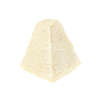
Pouligny Saint Pierre 250g
About This Cheese
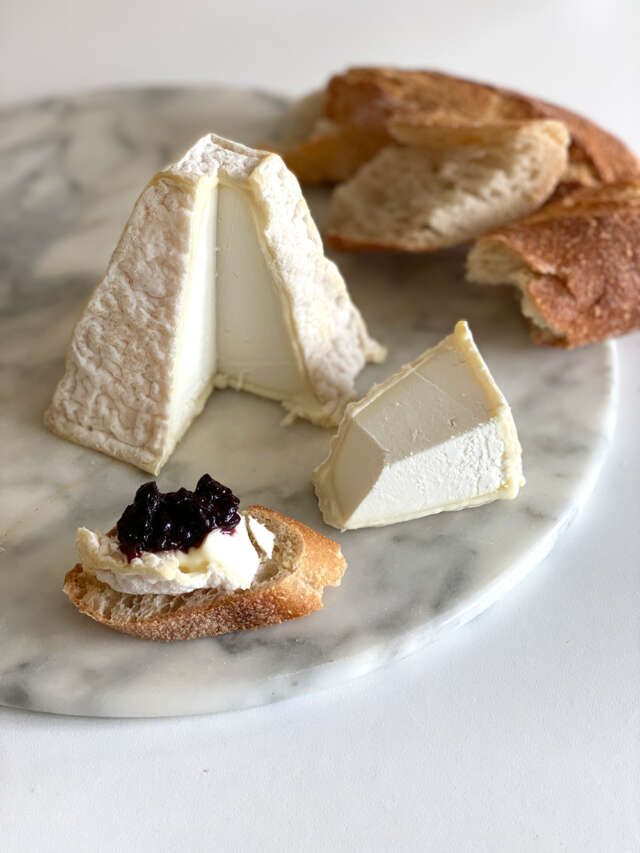
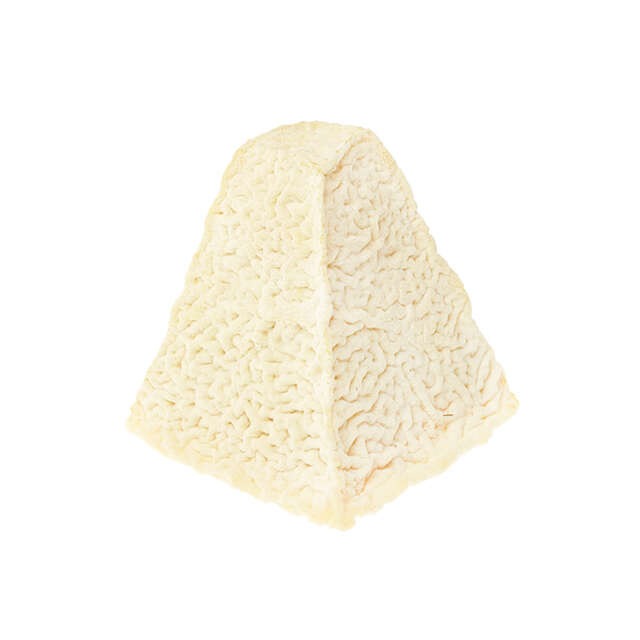
A dense flaky goat’s cheese with flavours of nuts, hay and herbs. Pouligny has a pyramidal shape with soft, wrinkled, ivory-coloured, natural rind. As the pyramid dries out, the wrinkles deepen and grey, white and blue moulds gather.
TypeSoft
Rennettraditional
RegionFrance
ProducerP. Jacquin
Milkgoat
Rindnatural, Geotrichum mold
Original price was: €13.00.€10.40Current price is: €10.40.

Story
This traditional French cheese is named after the eponymous village and goes by the nickname ‘Eiffel Tower’ in reference to its form. A good Pouligny St Pierre is perfect when the exterior mould it is developing blue-grey patches and comes with dense, lightly crumbly paste. The flavour can range from mild saltiness to sweet goat milk depending on ripeness and season. During production, the cheese is only lightly cut once the curds are formed and then ladled into pyramidal moulds. Once removed from forms the cheese is allowed to form its geotrichum rind by adding the culture directly to the milk, or spraying onto the exterior.
Producer
The Jacquin family began producing cheese in 1947 in the Loire Valley, France. The Lorie’s rich landscape is renowned for producing some of the best goat cheeses in the world and the Jacquin family are committed to quality made PDO goat’s cheeses. Pouligny achieved AOC status in 1972.
Goes Well With


FAQs
Cheese should be unpacked and stored in a cool place, ideally around 5 degrees. Take out about an hour before serving, and allow to come to room temperature. Leaving cheese come up to room temperature (“to chambre”) allows it to develop a fuller, more aromatic flavour. Beware temperatures that are too warm (hot kitchen) and try and let the cheese come up to temperature in a relatively cool place like a cool pantry. Harder cheeses can need a little more time than softer ones.
Cheeses like cheddars that have more open texture pastes where the curd is not heavily compacted during the cheesemaking process can have occasional blue veining. Though this blueing is caused by unintentional rouge pencillium genus mould that has found its way into the cheese, it is often sought after for its contributing flavour.
Frequently, cheeses that start to grow mould while aging, in storage, or during transit can be salvaged and are safe to consume. In the case of blue/white mould that has begun to form, it can be scraped off with regular dinner knife or back of chef knife, and bloomy rind cheeses often begin to re-rind themselves on the cut surface which can just be cut off or eaten.
Spoiled cheese has some key indicators – if you get an ammonia/sour smell or taste then it goes in the bin.
Fresh, high moisture, young cheeses (think mozzarella/ricotta/mascarpone/cream cheese) that have mould growing should be discarded immediately.
Moulds that show up with black or reddish hue should be discarded.
Our primary aim is to provide delicious, quality, safe cheeses to our Sheridans customers however cheese is a living thing with an agenda of its own. If you believe your cheese (or other food item) has spoiled, please contact us immediate at online@sheridanscheesemongers.com for a replacement or refund.
Nutritional Information
Ingredients: Raw Goat (MILK), salt, lactic starter, traditional rennet
For allergens see ingredients in bold
Nutritional values per 100g
Energy kJ/kCal 1282/309
Fat 25g of which saturates 18g
Carbohydrates 1g
of which sugars .2g
Protein 20g
Salt 1.8g