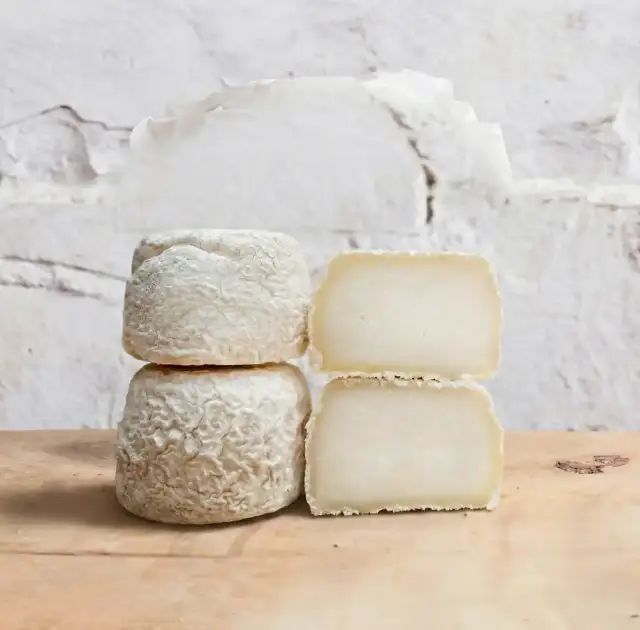
Crottin De Chavignol 60g
About This Cheese
Crottin de Chavignol is subtle, slightly earthy and nutty. The texture is crumbly and the mould on the rind matures into a bluish colour. Great on a cheese board and/or once a little older and on the firmer side, shaved onto a salad.
TypeSemi-firm
Rennettraditional
RegionBerry, France
ProducerAffineur Dubois-Boulay
Milkraw goat
RindNatural Penicillium
Original price was: €5.90.€4.72Current price is: €4.72.

Story
Crottin de Cavignol is a unique goat cheese that can be eaten and enjoyed throughout its stages of maturity. At a couple of weeks old, the crottin hasn’t developed a complexity of flavour and the rind is a faint fuzz of white mould. A couple of weeks later the cheese is covered in a downy white Penicillium rind and a speckle of blue mould has appeared on it. Inside, the paste remains white but the flavour has become more robust and complex. By two months the downy rind is covered in blue mould. As the cheese ages it dries further and the mould dies off, leaving a bluey-black rind. The paste protected by this hard exterior remains white and firm but the flavour is deeper, still sweet but a little sharp.
Producer
This fermier (farmhouse) goat’s cheese is made from raw milk in the Loire, not far from the celebrated wine-village of Sancerre. Dubois-Boulay are one of the three or four family owned affineurs dealing exclusively in Crottin de Chavignol. The production area for the cheese stretches from Sancerre to Berrichonne in Champagne, although the AOC states that all affinage must take place within a strictly delimited AOC area. For this reason, there is a preponderance of producers but few affineurs. Dubois-Boulay alone deal with over 200 different cheesemakers. Although the AOC permits the use of frozen curds, a measure designed to ensure year-round availability of goat’s cheese, the use of frozen curds is forbidden in cheeses labelled fermier.
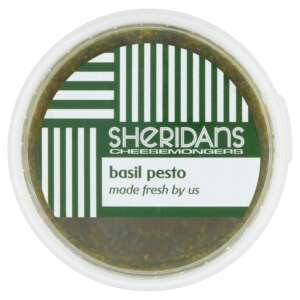
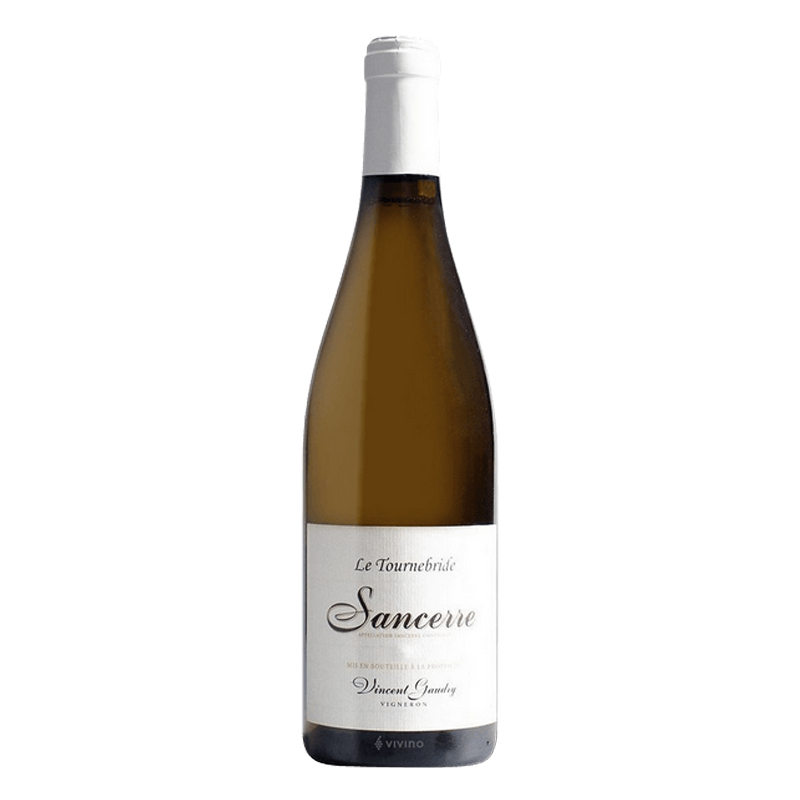
Goes Well With
You may also like…
-
 Sale!
Sale!
Selles Sur Cher 150g
Berry, France Original price was: €7.80.€6.24Current price is: €6.24. Add to Bag -
Sale!
Pouligny Saint Pierre 250g
France Original price was: €13.00.€10.40Current price is: €10.40. Add to Bag -
Sale!
Valencay Ash 110g
France, loire, France Original price was: €7.40.€5.92Current price is: €5.92. Add to Bag


FAQs
Cheese should be unpacked and stored in a cool place, ideally around 5 degrees. Take out about an hour before serving, and allow to come to room temperature. Leaving cheese come up to room temperature (“to chambre”) allows it to develop a fuller, more aromatic flavour. Beware temperatures that are too warm (hot kitchen) and try and let the cheese come up to temperature in a relatively cool place like a cool pantry. Harder cheeses can need a little more time than softer ones.
Cheeses like cheddars that have more open texture pastes where the curd is not heavily compacted during the cheesemaking process can have occasional blue veining. Though this blueing is caused by unintentional rouge pencillium genus mould that has found its way into the cheese, it is often sought after for its contributing flavour.
Frequently, cheeses that start to grow mould while aging, in storage, or during transit can be salvaged and are safe to consume. In the case of blue/white mould that has begun to form, it can be scraped off with regular dinner knife or back of chef knife, and bloomy rind cheeses often begin to re-rind themselves on the cut surface which can just be cut off or eaten.
Spoiled cheese has some key indicators – if you get an ammonia/sour smell or taste then it goes in the bin.
Fresh, high moisture, young cheeses (think mozzarella/ricotta/mascarpone/cream cheese) that have mould growing should be discarded immediately.
Moulds that show up with black or reddish hue should be discarded.
Our primary aim is to provide delicious, quality, safe cheeses to our Sheridans customers however cheese is a living thing with an agenda of its own. If you believe your cheese (or other food item) has spoiled, please contact us immediate at online@sheridanscheesemongers.com for a replacement or refund.
Nutritional Information
Ingredients: Raw Goats MILK, Organic sea salt,cultures, traditional rennet
Allergens listed in BOLD
Nutritional values per 100g
Energy 976 kj/233kCal
Fat 18.1g
Protein 15.4 g
Carbohydrate 2.2g
Sodium 376 mg